

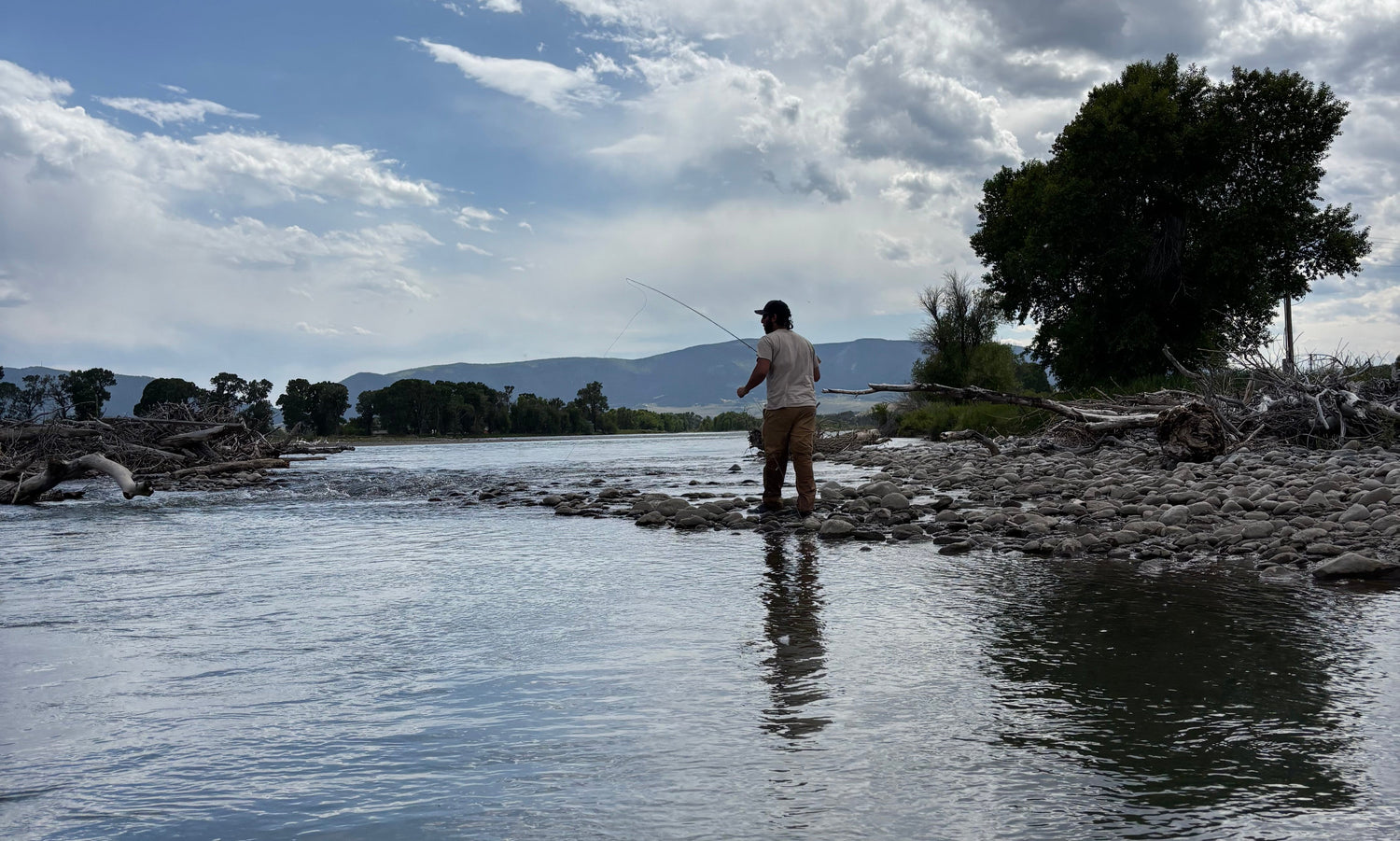
Yellowstone River
Streamflow: 6,270 Cubic Feet per Second on June 25 >>
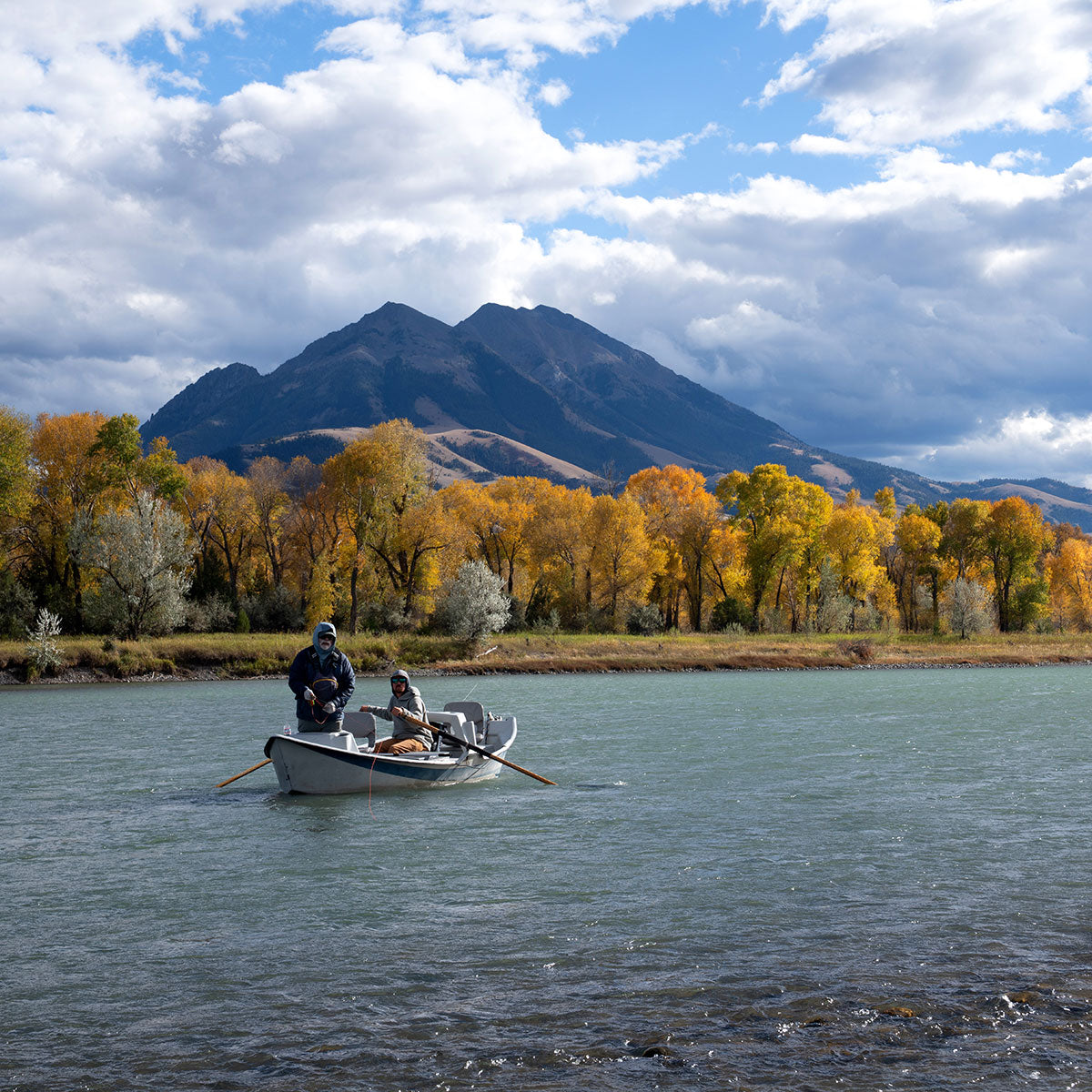
The Yellowstone River continues to drop in its post-runoff flow and is clearing up. Dry-dropper combinations, like the Chubby Chernobyl paired with a stonefly nymph, have been consistently producing fish over the last week as have standard double-nymph rigs under an indicator. Our favorite patterns are Pat’s Rubber Legs, Prince, Flashback Pheasant Tail, Chubby Chernobyl, Water Walker, PMD dry, Yellow Sally dry, and Golden Stonefly patterns.
Fish have been up against the banks but are migrating 5 to 10 feet off the bank as spring runoff recedes.
Paradise Valley Spring Creeks
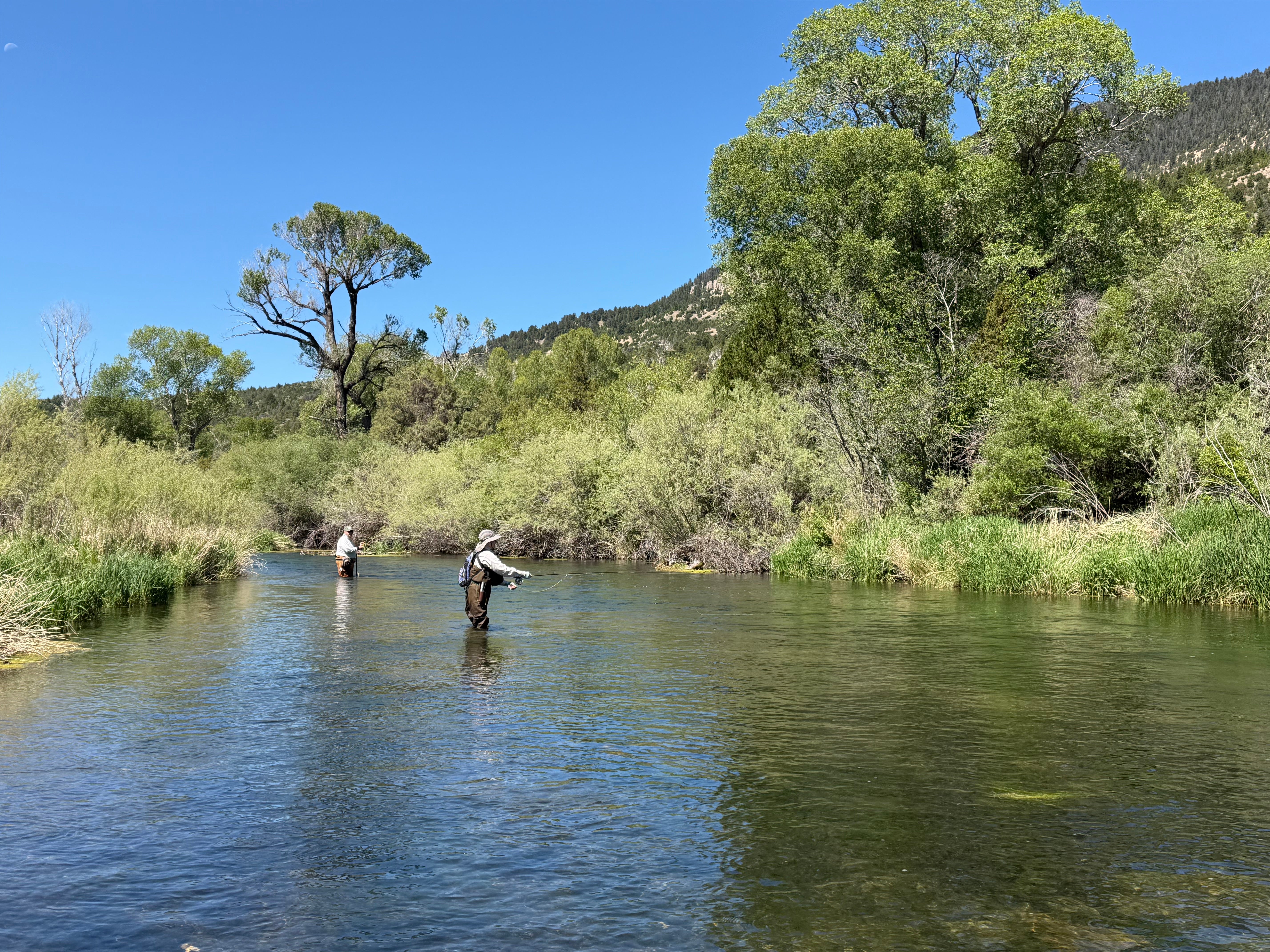
PMDelerium. The Paradise Valley spring creeks are seeing their annual hatch of pale morning duns. This is one of the premier hatches for the spring creeks and what makes them famous. The PMD hatch on our spring creeks is arguably one of the most famous hatches in all of fly fishing. This is dry fly fishing at its finest. It is important to have flies that imitate each of the life stages of the pale morning dun mayfly on hand when fishing in order to adapt to changing preferences in the hatch (nymph, emerger, dun, spinner.)
Additionally, we are seeing good hatches of midges early in the morning prior to the PMD hatch as well as in the evening.
Our favorite patterns are:
- PMD comparadun size #16 and #18
- Harrops biot CDC emerger size #16 and #18
- Last Chance Cripple size #16 and #18
- PMD tilt wing size #16 and #18
- PMD spinner pattern #16 through #20
- Olive and natural pheasant tail nymph size #18
- Crackback nymph size #16 through #20
- Zebra midge size #20 through #22
- Harrops hanging midge size #20
Area Lakes and Ponds
Area lakes and ponds are fishing very well. We are still seeing strong hatches of Callibaetis mayflies. Fish are very cued into the spinner fall, usually around mid-to-late morning. Look to the windward side of a lake where surface material and food are pushed into concentration.
Leech patterns, scud, damselfly, and midge patterns are also producing fish, both stripped actively (like a streamer) as well as stripped passively underneath an indicator in the deeper water of drop-offs. When fish are in the shallows, feeding an attractor pattern dry fly with a dropper is a great way to spot and stalk these cruising fish.
- Jan Axtell